Showing posts with label forgiveness. Show all posts

Tuesday, June 1, 2021

Words of Wisdom on the Humane Virtues


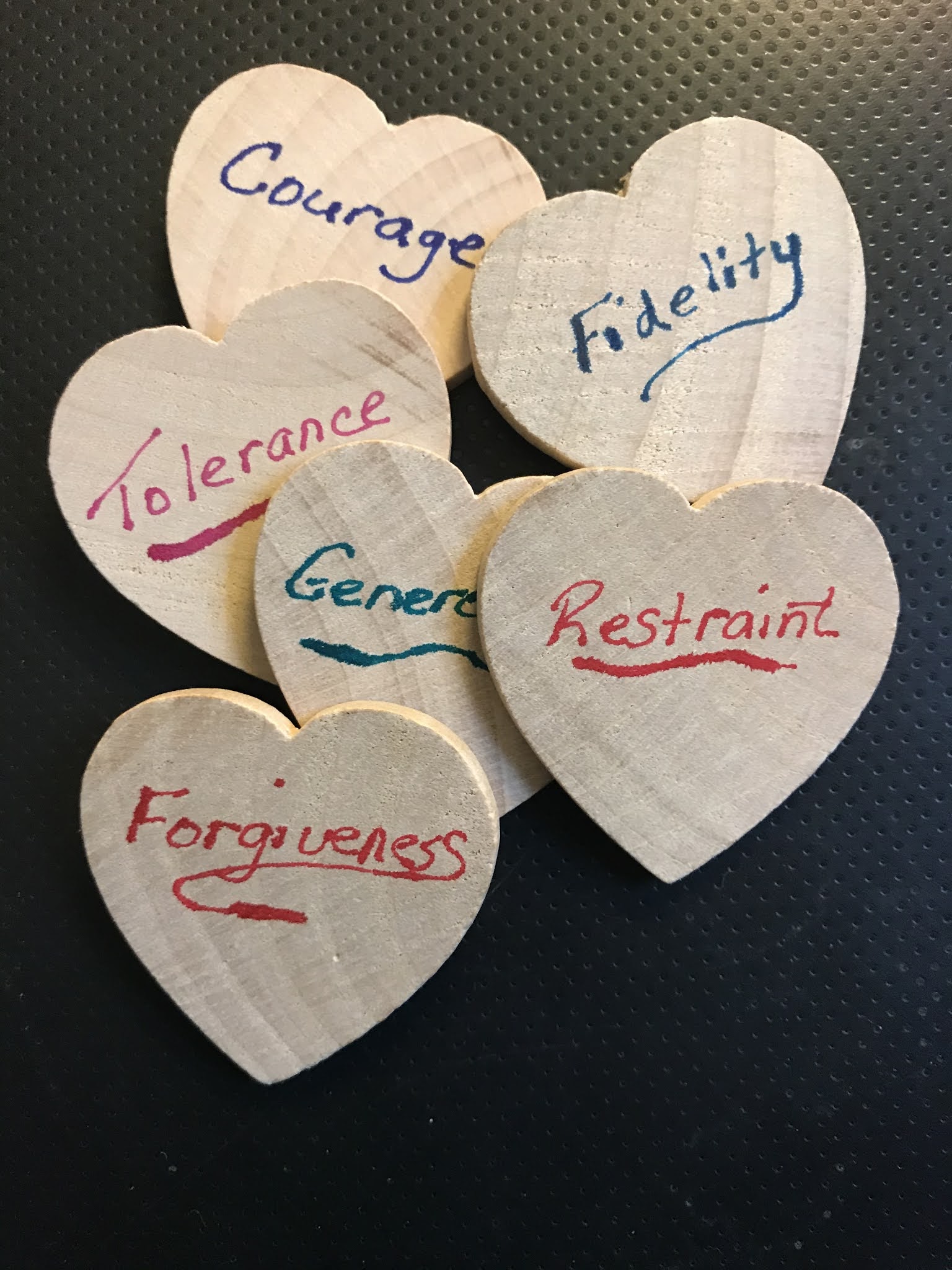
I have been reading such a wise book, a challenging book, Forgiveness and Other Acts of Love by Stephanie Dowrick. In her book Dowrick examines the humane virtues: courage, fidelity, restraint, generosity, tolerance, and the oh so big one, forgiveness. 

Needless to say, I have underlined a lot in this book, and many times I thought I heard the author saying, "Nancy, this paragraph is for you!" or "Go back and read that sentence again, Nancy. Don't pretend these words don't apply to you."

Don't you hate it when that happens--when someone you don't even know, points out the work you need to do! 

Yes, I could use more courage, and yet at the same time Dowrick reminds me that I have survived the daily navigations between known and unknown.

Yes, I could exhibit more fidelity to the person I was created to be, but I have also paused along the way to remember what grounds and supports me.

Yes, I could exhibit more restraint, which Dowrick says is an expression of one's choice to act--or not--but somedays I actually start the day with a full consciousness of attitude. 

Yes, I could be more generous with my time and my gifts, but I know I have had times when I have flowed with love. 

Yes, I could live and act with more tolerance, but I rejoice when I feel myself open to what I don't know and to what challenges me.

Yes, I could forgive myself and others more graciously and willingly. What freedom, what lightness when forgiveness lives in and moves my heart.  

The purpose of this book is not to shame you nor is it a guidebook for becoming more virtuous. No, this is a book to read on the patio in the quiet of the day or place on your bedside table or even on your kitchen cupboard to read as you wait for the rhubarb sauce to boil. Read it in bits and pieces. You'll recognize the relevant parts and feel its companionship, one human, one spirit to another. 

 In the chapter on forgiveness, Dowrick writes

                It is the means to let go not only what was done
                to you, but how you were then, so that you can
                experience yourself as you are now. When it is
                appropriate, it is also the means to move on
                from an old version of another person to who
                that person is now. p. 337

The new version of myself is not perfect, that's for sure, but I yearn to be a more complete version of myself, and than means a person who lives with courage, fidelity, restraint, generosity, tolerance, and above all, a person who forgives.

I have work to do. 

Thich Nhat Hanh offers hope. "Looking deeply at our own mind and our own life, we will begin to see what to do and what not to do to bring about a real change." p. 316

One more thing. This past week I encountered the same quote in three different places. I guess that means I need to pay attention. 

            Find your practice and practice it.
            Find your teaching and follow it.
            Find your community and enter it.
            Find the suffering within yourself and the suffering
                of others and heal them.
                                        James Finley

I think Stephanie Dowrick would agree.

An Invitation
Which of the humane virtues is most challenging to you? I would love to know. 

NOTE: Watch for an announcement here in the next couple weeks about my "Summer Spirituality Guide."


Tuesday, May 27, 2014

Tuesday's Reflection: Memorial Day

The view from our front stoop
I confess I normally don't think much about the meaning of Memorial Day, except that it signals the start of summer, but this year the Memorial Day weekend was kicked off by a patriotic program presented by the four kindergarten classes at our grandchildren's school. Who could resist that? 

Each class presented one of our national symbols: Mount Rushmore, the American bald eagle, the American flag, and the Statue of Liberty. Several students in each class recited a few lines about their symbol and then passed the microphone on to the next person. Each spoke their memorized lines so clearly and proudly, including our grandson Peter who told us about the Statue of Liberty's torch. I must admit, however, that my favorite fact was about the bald eagle. Did you know it has three eyelids? 

After the recitations, each class, many of the children dressed in red, white, and blue, sang one of our patriotic songs. I so remember  learning these songs in elementary school, but realized how infrequently there is a chance to sing them. Our grandson's class played the first verse of My Country 'Tis of Thee on the kazoo--a unique rendition to say the least- and then sang the second verse. 

At the end of the program all the classes sang It's A Grand Ole Flag. Some words may have been mumbled, and not every one was in the same key, but the enthusiasm of these young citizens, representing diverse backgrounds, races, and ethnicities won't be forgotten. The large loving crowd of parents, grandparents, and siblings cheered, and as we honored our children who expressed pride in our country's freedoms, we seemed to also reinforce our own core belief in liberty and justice for all. It was a good moment. 

And then summer began.   

The Meaning of Memorial Day: Reconciliation
The first Memorial Day was May 30, 1868, when flowers were placed on graves of Union and Confederate soldiers in Arlington Cemetery. Now we think of it as primarily a day of remembrance for all those who have died in service to our country, but I am struck by the original intention, which was reconciliation at the end of the Civil War. 

Simply stated, reconciliation means resuming a relationship, but where there has been hurt or even abuse, where trust has been broken, nothing about reconciliation is simple. In my work as a spiritual director many sessions with directees focus on the pain of broken relationships, including one's relationship with God. 

Forgiveness, it needs to be emphasized, is not the same as reconciliation. We each have the power to forgive, but none of us has the power to force reconciliation on someone who does not want it. Forgiveness may happen in an instant, although forgiveness just as often is an intention and a process. However, reconciliation happens over time as goals are set and trust is rebuilt. 

Reconciliation needs to be an agreed upon goal by both parties, and sometimes, in the case of abuse, reconciliation is not a good idea and may, in fact, be dangerous. 

With Memorial Day leading us into a new season, a season, which often includes a break or change in routines and an openness to adventure and new possibilities, perhaps this is a time to consider relationships where there is hope for reconciliation. If forgiveness has opened space in your heart for a new or renewed relationship, perhaps now is the time for a first step. If so, I commend these words to you by Marcia Ford in her excellent book, The Sacred Art of Forgiveness, Forgiving Ourselves and Others through God's Grace:

        Imagine the relationship you would like to have with
        someone you have forgiven but have yet to be reconciled
        with. Be realistic. Consider what your relationship was 
        before, the nature of the offense, and the level of trust 
        you hope to have in the future. If the offender was once
        your closest friend and confident, you may need to
        ratchet down your expectations considerably, settling
        for an occasional lunch date instead of the daily heart-
        to-heart conversations you had grown accustomed to. If
        the offender was a serious abuser, your best description of
        the relationship you would like to have may very well include
        the word "non-existent." Just be honest with yourself, and
        then you'll have a clear idea of what you need to work toward
        in order to rebuild the relationship. p. 103 

The purpose and hope of the first Memorial Day was a tall order, and some may say total reconciliation in our country has yet to be achieved, but that doesn't mean we as individuals can't work towards reconciliation in our own lives when it is desired and appropriate. 

An Invitation
Are there areas of your life where reconciliation would lead you towards wholeness? Are there people with whom you desire reconciliation and if so, have you done the work of forgiveness? What does reconciliation mean to you? I would love to know.        


Wednesday, January 11, 2012

Yet More Thoughts About Intentions

       I am paying attention not only to when I use the word "intention," but also to times when I wish I had used it. I recall years ago when I struggled with "forgiveness." I said "I forgive," but I didn't feel it at that point. How much more honest it would have been if I had said, "I intend to forgive."
      Forgiving is a process, and I had not yet done the inner work to arrive at a clear and clean forgiveness.
      I was fairly sure I would get there. Everything in my heart wanted to be there, but it wasn't fair of me to state my forgiveness when I didn't feel it yet. Eventually, I arrived at that holy place, but how different it would have been if I had first said "My intention is to forgive fully and completely." An intention holds within it an obligation to do your very best to fulfill it. An intention is not an empty promise. An intention is a direction, a movement forward, an expression of one's heart, an opening to one's essence.
     When has the word "intention" created an opening in your life? I am impressed with one example I read in a friend's blog and invite you to be inspired by her story.  http://coachnotes.wordpress.com/2012/01/10/happy-new-year-and-hooray-for-daily-walks/   
      Light Blessings to you as you explore your intentions for the new year.