Showing posts with label gardening. Show all posts

Thursday, June 13, 2019

Hope in the Gardens: Thursday's Reflection

Years ago when we visited England we bought two mugs at one of the country estates with gorgeous gardens. Printed on one mug was "Head Gardener" and on the other "Undergardener."

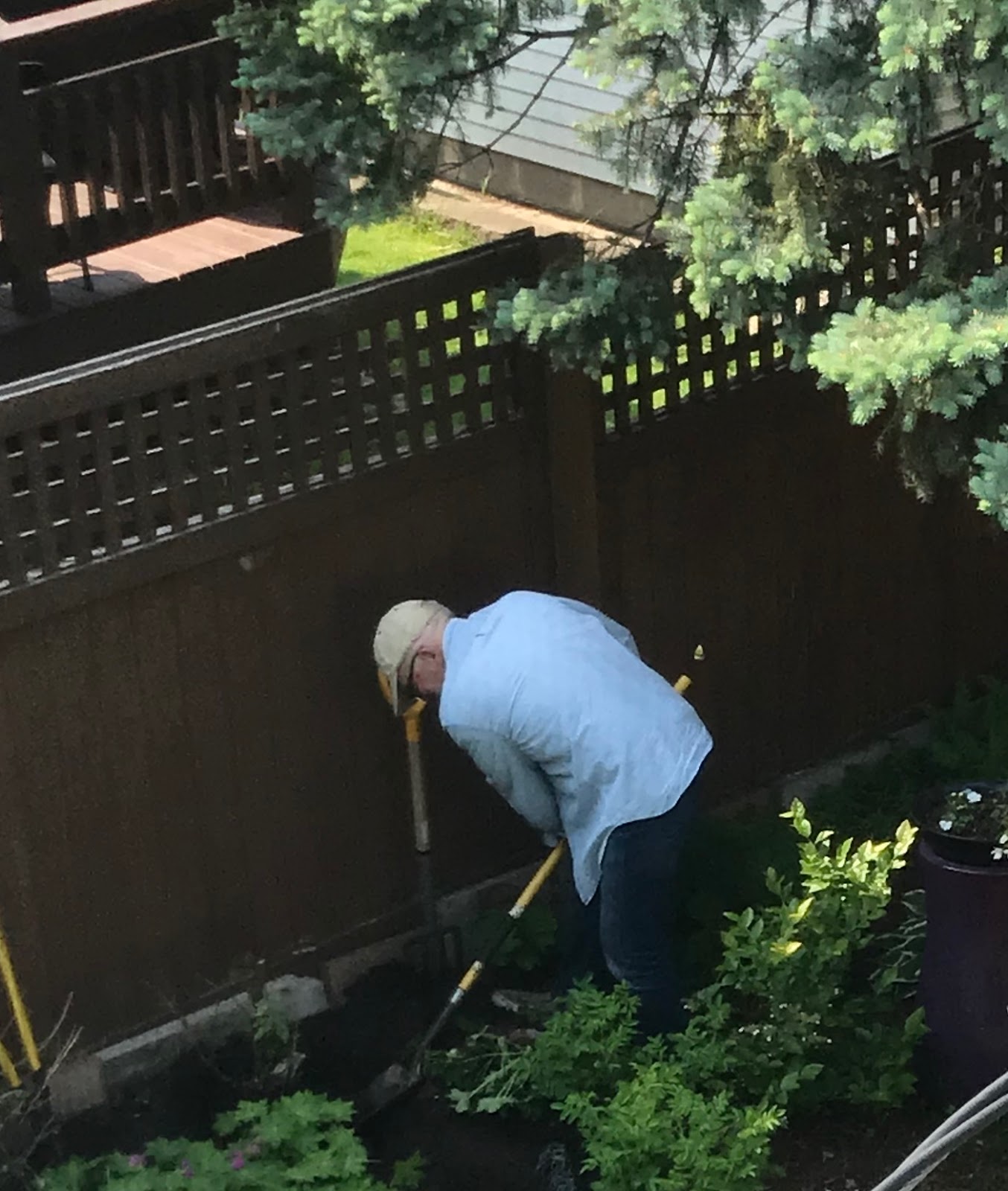
In our house my husband is the head gardener, and these days, because our gardening yard space is small, I am not even the undergardener. I had that title when we lived at Sweetwater Farm, and I was the primary weeder. I even enjoyed that ongoing task, for I could see immediate results, and it resembled cleaning, which most of the time I enjoy. 


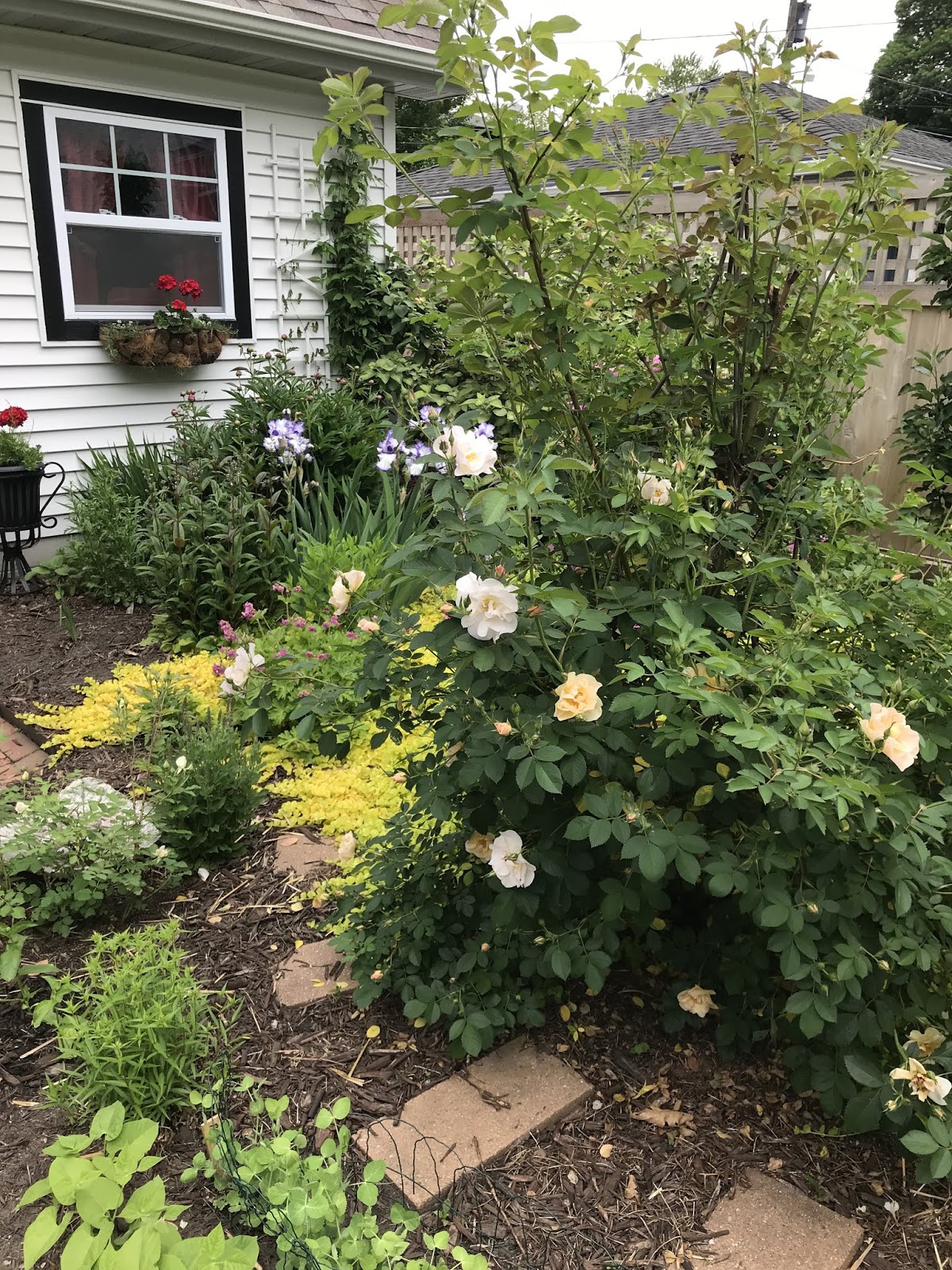
Now, my main role is to enjoy the fruits of my husband's labor and talents.  Most days now you can find him "playing" in the garden.

              Did you ever meet a gardener, who, however, fair
              his ground was absolutely content and pleased?...
              Is there not always a tree to be felled or a bed to be
              turfed?...Is there not ever some grand mistake to be
              remedied next summer?
                                       The Rev. Samuel Hole (1819-1904)

This quotation from Charles Dickens' Sketches by Boz also describes my husband the gardener.

In fine weather the old gentleman is almost constantly in the garden; and when it is too wet to go into it, he will look out of the window at it by the hour together. He has always something to do there, and you will see him digging, and sweeping, and cutting, and planting, with manifest  
delight...; and in the evening when the sun has gone down, the perseverance with which he lugs a 
great watering-pot about is perfectly astonishing.


The beauty is inspiring and pleasing, but gardens also represent hope at a time when that feels in short supply and we need reminders to lift our hearts.


                Of all human activities, apart from the procreation
                of children, gardening is the most optimistic and
                hopeful. The gardener is by definition one who
                plans for and believes and trusts in a future, whether
                in the short or the longer term. To sow seeds and 
                plant out, to graft and propagate, whether it be
                peas and beans, apples and plums, roses and peonies,
                is to make one's own positive stake in that future, a
                gesture, declaring that there will be weeks, months,
                years ahead. ...

                Those who constantly think of war and dread its
                prospect, who see an end to mankind and his 
                planet, whose spirits are shriveled and hearts bowed
                down by the troubles and threats of the age, who 
                refuse to have any hope, take any comfort, see the
                glimmer of any new dawn, should be gardeners. The
                gardener learns to be by turns daring and adventurous,
                tender and ruthless, meticulous and haphazard, gentle
                and patient. But above all, he learns to revel in today,
                while being ever hopeful of tomorrow.
                                      from Through the Garden Gate
                                               Susan Hill

If you are a gardener, I thank you. If you aren't a gardener, why not thank someone who is and take a cue from the gardens around you and live with a hope filled heart. 

An Invitation
What gives you hope? I would love to know. 


Tuesday, May 26, 2015

Following The Memory Trail: Tuesday's Reflection


When I spoke with my father yesterday morning, Memorial Day, he mentioned remembering his father and Aunt Clara planting geraniums in pots at the cemetery on Memorial Day. Now did he say red geraniums or am I just filling in that detail? His memory made me think about pots at my parents' home planted with red and white geraniums. The front door was painted red, and my mother believed in Color Coordination. From that memory I jumped to a memory of a man who owns a small and delectable nursery. I recall his condemnation of geraniums, calling them "ordinary" and "Midwestern" and "unimaginative." 

That memory led me to a blustery, beyond cold evening in his home in which several gathered to read to each other from favorite books about gardening. How I happened to be there or what I or anyone else read, I don't quite recall, but I remember the evening's enveloping English coziness. I lingered in that memory for awhile, and then I meandered to our gardens at Sweetwater Farm where we didn't have any geraniums, but where the Head Gardener, husband Bruce, had open-ended space to indulge in his gardening fantasies, even if he didn't have open-ended time. He did have, however, his Undergardener, me, who weeded and followed instructions and rejoiced in his vision and hard work.


I could stay in those memories for a long time following the garden paths, feeling such gratitude for those years of privileged creativity. At the same time, I recognized it would be easy especially on a grey day like yesterday to feel loss, to detour into what I miss, but I decided, quite intentionally, to set those thoughts aside and instead return to the present. 


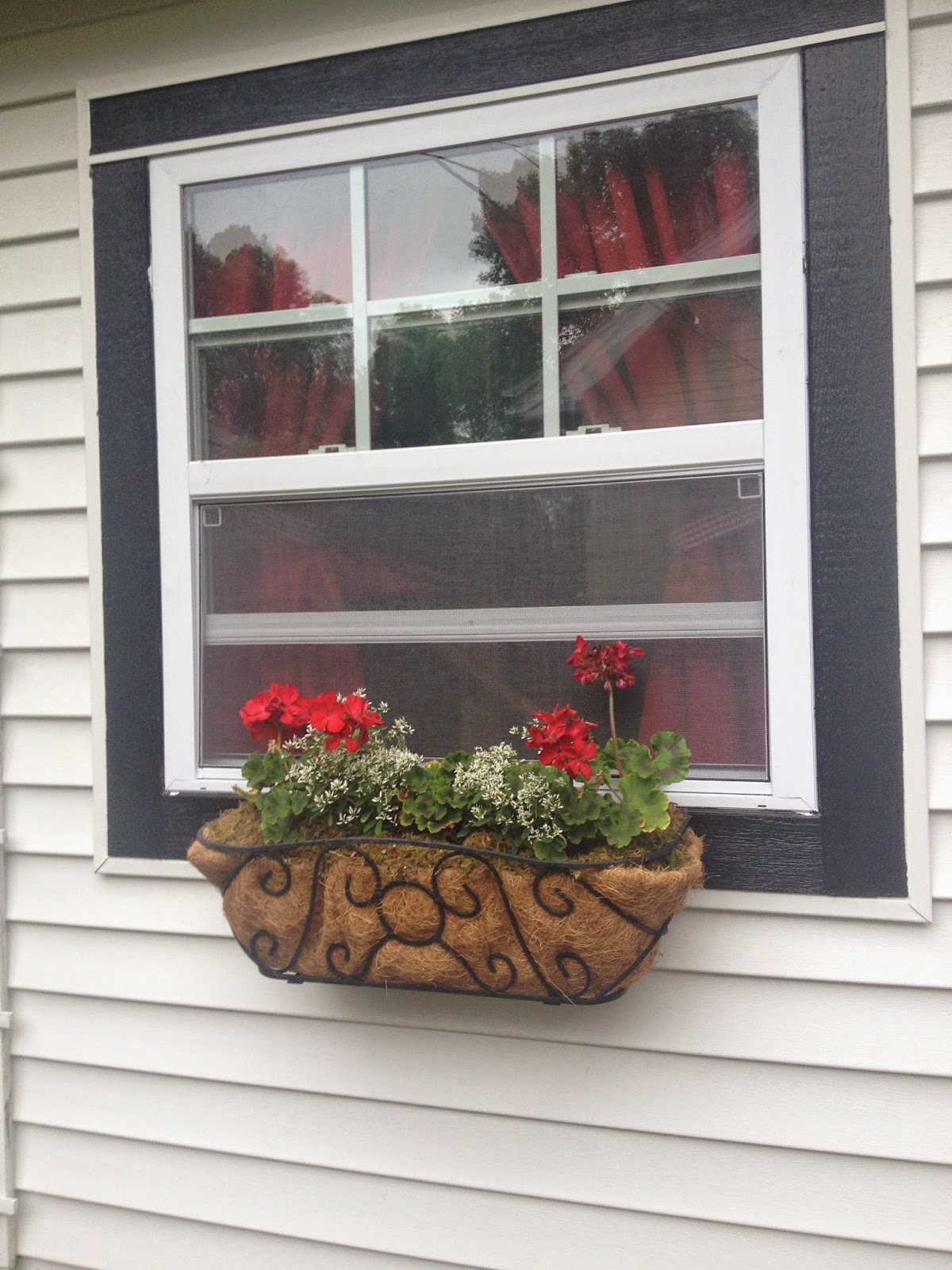
Bruce has planted geraniums, red geraniums, in the window boxes on the garage. And we even have a red door. I love the happy old-fashioned way they look, and I don't care if they are "unimaginative" or "ordinary." They remind me of a set of dishes I collected when we lived at Sweetwater Farm--a red geranium design. Whoops--there is another memory. This could go on and on, for that is what memories do. 


Memories lead us on meandering paths, similar to walking a labyrinth. One turn leads to another. One more time around and still there is more pathway ahead. How easily, however, a labyrinth, which has one way in and then you follow the path in reverse to where you started, can become a maze in which you can lose your way and still not find your way out even after many tries. Sometimes being lost in memories confines us, reinforcing what actually needs to forgotten and released. 


Recently, I came across a book that invites meandering, Consolations, The Solace, Nourishment and Underlying Meaning of Everyday Words by the poet David Whyte. Here's what he says about memory.

          Memory is not just a then, recalled in a now, the past
          is never just the past, memory is a pulse, passing through
          all created life, a waveform, a then continually becoming
          other thens, all the while creating a continual but
          almost untouchable now. …

          We can be overwhelmed, traumatized, made smaller
          by the tide that brought us here, we can even be
          drowned and disappeared by memory; or we can spin
          a cocoon of insulation to protect ourselves and bob
          along passively in the wake of what we think has
          occurred, but we also have other more engaging
          possibilities; memory in a sense, is the very essence
          of the conversation we hold as individual human
          beings. A full inhabitation of memory makes human
          beings conscious, a living connection between what 
          has been, what is and what is about to be. Memory 
          is the living link to personal freedom. pp. 143-145

All that from red geraniums? Yes.

Memories as Spiritual Practice--Lectio Divina
Spending time in memory can become a spiritual practice when it leads us to deeper awareness of our own essence and our connection to something greater than ourselves. Perhaps you have heard of the spiritual practice, lectio divina, which is a contemplative way to read scripture, but I think it can be applied to memories that arise in us, as well. 

I am grateful to Christine Valters Paintner's new book The Soul of A Pilgrim, Eight Practices for the Journey Within, for introducing new language for the lectio divina steps. (pp. 23-24). Why not approach memories as an exercise in lectio divina? 

First Movement--Lectio: Settling and Shimmering. When you feel a memory arise within you, give yourself time and space to settle into it and become present. What image or words are shimmering for you? Walk around that image, getting a good look. Listen carefully to the words that may be part of the memory.

Second Movement--Meditatio: Savoring and Stirring. Look again, feel again the memory and let imagination fill it. Are there smells, sounds, tastes, touches, sights within this memory that invite you? Be with them and allow the memory to grow and expand.

Third Movement--Oratio: Summoning and Serving. Revisit the memory again and ask yourself why is this memory rising within me now? Where is it leading me?

Fourth Movement--Contemplatio: Slowing and Stilling. Know that this time of memory is also a time with God, the Sacred, the Divine. Allow yourself to be, with no need to understand or resolve. Just be. 

My lectio divina red geranium time led me to gratitude for the many gardens I have known: big and small, ones I have visited and ones at our own homes, friends' gardens, public gardens, gardens only seen in books and magazines. My heart opened to all the beauty in the world, beauty we participate in creating and beauty we are asked to nurture. 

An Invitation
I invite you to open to your memories and explore them using the spiritual practice of lectio divina. Consider journaling about your experience. I would love to know what you discover.  

Resources
David Whyte here.
Christine Valters Painter here. 

Tuesday, July 22, 2014

Tuesday's Reflection: My Evolution as a Gardener

 The best way to get real enjoyment out of the garden is to put on a wide straw hat, hold a little trowel in one hand and a cool drink in the other, and tell the man where to dig.
                           Charles Barr

Charles Barr and I may be kindred spirits! Those of you who know me may laugh at the title for this post. "Evolution as a Gardener? You're not a gardener," I can hear many of you say, and you would be right or almost right. I don't need to be a gardener, for I am married to a master gardener, the head gardener in my life. However, over the years I have been the under gardener, although during our Madison years, I couldn't claim even that lowly title, for our gardening space was very confined, and even the head gardener didn't devote as much time and attention to gardening as in our other homes. Here, in our St Paul home, my gardening has been limited to suggestions and support so far, thanks to my broken ankle, but I aspire to return to my under gardener role. 

What does it mean to be an under gardener? Well, in my case, it means weeding and doing chores as assigned. I actually like to weed, finding it not that different from cleaning the house when it has been neglected and from editing, which I have always preferred to writing the first draft of a current writing project. Writing the first draft is similar to planting, and, frankly,  I am not so crazy about the digging process. Like Charles Barr, I am grateful to direct the digging! 

As a child, I don't ever recall doing anything in a garden other tha than picking strawberries in my grandmother's massive farm garden, eating more than went into the bowl, I am sure. We didn't have what I think of as gardens in any of my growing up homes. Dad mowed the lawn and tended shrubs and plantings close to the house, and we generally had hanging baskets in the front of the house and a big planter or two, but no gardens with flowers to cut or vegetables to harvest. 

My first real experience with gardening followed a trip with our school-aged children to the living museum of Plymouth Colony in Massachusetts where I interacted with some of the knowledgeable re-enactment actors portraying the pilgrims who had settled there in the 17th century. I was intrigued by the herb garden and their use of herbs. When I asked what herbs they used in cooking, they were quite surprised, telling me herbs were for healing and other medicinal purposes. They stayed in character, faithful to their colonial time period. That encounter led me to a wonderful book by Emelie Tolley and Chris Mead Herbs, Gardens, Decorations, and Recipes and a decision that I wanted to grow herbs. 

That was all the head gardener needed to hear, and he was off and running, creating an herb garden in our small city backyard, complete with white picket fence. I loved discovering ways to use herbs or "green things," as the kids called them, in my cooking and baking. My knowledge grew, along with my library of books about herbs, but I also enjoyed the hands-on tasks, weeding and watering and harvesting and learning the proper growing conditions, and even sometimes, planting.

When we moved to Sweetwater Farm in Ohio in 1997, the head gardener was in paradise and with each passing year the number of gardens to tend grew, including space devoted to my beloved herbs. The under gardener suddenly had to be more involved and not as selective about her choice of activities or when she wanted to do them. All of a sudden I had gardening clothes and often could be seen on hands and knees weeding and weeding and weeding and weeding, and I was proud I was adding to the beauty of our sanctuary. I needed lots of instruction from the head gardener. Is this a weed? No, he would patiently say, or would remind me that something in fact was a weed, and I shouldn't ignore it. 

Along with my weeding, I loved walking among the herbs with my large gathering basket, cutting lavender to dry and basil to make into pesto or lemon balm for a fresh pitcher of lemonade. I felt a satisfaction I am not sure I had felt before, and I admit I have missed that in recent years. I started thinking of myself not just as an under gardener, but as an herb gardener. 

I have a nice patch of herbs here in this house planted by the head gardener, but as time goes on I will be in charge of this plot. I have used some basil and oregano, and I am happy to see the lavender is doing well. Eventually, I will put my weeding hat on, but not quite yet. For now I am happy to acknowledge the desire is there and to know that a place in the garden awaits me. 

An Invitation
In what roles have you evolved?  Are there areas of your life where you are an "under gardener" and how does that feel? Are you satisfied with that role? What role have you needed to set aside in recent years and is it something you want to claim once again? I would love to know. 

My Pesto Recipe
2 cups fresh basil leaves, washed and dried (I like to use a mix of basil varieties.)
6 garlic cloves
1 cup shelled walnuts
1/2 cup olive oil (GOOD) olive oil mixed with 1/2 cup vegetable oil
1 cup grated Parmesan cheese
1/4 cup grated Romano cheese
Salt and pepper

Combine the basil, garlic, and walnuts in the bowl of a food processor; chop coarsely. With the motor still running, add the combined oils in a slow, steady stream. Shut the motor off and add the cheeses and salt and pepper to taste. Process briefly to combine. Scrape the pesto into a bowl and cover until ready to use.
To Freeze: Scrape into a plastic freezer bag, squeezing out the air and seal. Lay flat in your freezer. 

Makes approximately 2 cups. 

Lemon Tea Bread (from Herbs by Emelie Tolley and Chris Mead)
Makes One Loaf

3/4 cup milk
1 tablespoon finely chopped lemon balm
1 tablespoon finely chopped lemon thyme
2 cups all-purpose flour
1 1/2 teaspoons baking powder
1/4 teaspoon salt
6 tablespoons butter, at room temperature
1 cup sugar
2 eggs, beaten
1 tablespoon grated lemon zest

Butter a 9 x 5 x 3-inch pan. Preheat the oven to 325 degrees. Heat the milk with the chopped herbs and let steep until cool.

Mix the flour, baking powder, and salt together in a bowl, cream the butter and gradually beat in the sugar. Continue beating until light and fluffy. Beat in the eggs, one at a time. Beat in the lemon zest. Add the flour mixture alternately with the herbed milk. Mix until the batter is just blended.

Put the batter into the prepared pan. Bake for about 50 minutes, or until a toothpick inserted in the center comes out dry. Remove from the pan onto a wire rack that is set over a sheet of wax paper. Pour lemon glaze over the still-hot bread. Decorate with a few sprigs of lemon thyme. 

Lemon Glaze
Juice of 2 lemons
Confectioners' sugar

Put the lemon juice in a bowl and add the sugar, stirring until a thick but still pourable paste forms. Pour the glaze over the hot bread. 


Thursday, July 17, 2014

Tuesday's Reflection: Creating a Place of Sanctuary


Now that our side garden, our Cotswold garden, (see my post Evolution of a Garden ) is a reality, although one that will continue to evolve and develop, I have been thinking about how that garden will be used, the function of that space. The dimensions of the space are not large, eliminating it as a party or gathering space. A third chair could be added, maybe a fourth, when needed, but this garden feels more private, a place for one or two, a place where Spirit awaits one's presence. A place where one moves from the outside world to the inner world. A place where nature encourages a return to stillness.  

This garden feel like a sanctuary. 

               In the garden more grows than the garden.
                                        Spanish Proverb

This morning before going on my walk, which in its own way, is a form of sanctuary, I watered the pots of flowers.  I opened the back gate and walked towards the front of the Cotswold garden, stopping to water the large pots there as I made my way towards the entrance to the garden. With those few steps, I felt myself open to the day. I paused and took three deep cleansing breaths and gave thanks for the new day. 

Later, when I returned from my walk on this fresh and glorious day, I re-entered the Cotswold garden to sit quietly and check in with myself. How can I be more present and live as the person I was created to be? What is needed from me today so my life and all other life is served well? How can I enhance my own healing and the healing of others today? What do I need to lift up? Answers to these ongoing questions in my life did not come soaring in through the garden entrance, just because I was sitting in stillness, hands opened to receive, but instead I knew what was important right then was asking them, being there. 

I also knew as I sat there I added to the Spirit of that place. When you sit with me there, you will add to the Spirit of that place.  Sitting there, being in that place can become a spiritual practice, for this is a place of sanctuary. 

The Meaning of Sanctuary
Finding sanctuary is not about isolating oneself or escaping from what most needs to be confronted or most needs response or acceptance. Finding sanctuary is not about denying one's life or hiding out, but instead in sanctuary one clears space within in order to reconnect,  whether it is with nature, with others, with oneself, with Spirit. Creating sanctuary and spending time there is about embracing your own sacred being, along with all that is sacred in the universe. Sanctuary times restore the soul rather than erase all that causes unrest. If you are too full, sanctuary time can let some of the air out from the balloon about to burst. If you are running on empty, sanctuary time can enrich and refresh you. Sanctuary time welcomes you, whatever the need. 

Lorraine Anderson in the book of women's prose and poetry she edited, Sisters of the Earth, encourages the art of being, "making a conscious choice to slow down to seed time or rock time, to still the clamoring ego, to set aside plans and busyness, and simply to be present in my body, to offer myself up." That is sanctuary time.

Places of Sanctuary
One obvious place to go for sanctuary is a garden. 
      
       When you create a garden with deep intent, you are
       creating a sacred place in which, like the Divine, 
       you can pour out your love, creativity and compassion.
       You are, in a sense, creating a small sanctuary in which
       your soul and the soul of the world may dwell. This 
       sanctuary garden become your own creation story to 
       nurture within the body of the Earth--your form of 
       Eden. And, as this paradise grows outside, so it grows
       as well within your heart. 
                              The Sanctuary Garden, Creating a Place
                              of Refuge in Your Yard or Garden
                              Christopher Forrest McDowell and Tricia
                              Clark-McDowell, p. 20

I didn't know my husband was creating a sanctuary garden when I suggested we use the side yard as a kind of porch or additional living space, but that is what has happened, and I am so grateful. I also know that gardening is a sacred activity for him, a way he restores and finds sanctuary, and I am grateful for that, as well. 

Sanctuary, however, can be any place. According to Thomas Moore in his classic, The Re-Enchantment of Everyday Life, sanctuary is found in a space "where eternity is more evident than time and where the ritual arrangement of life is more important than the business of surviving and making progress." p. 97. That space may be the chair in your living room where you meditate or pray every morning before the rush of the day begins. That space may be standing outside a child's door after the final kiss and hug goodnight or at your front door as you turn out the light. Perhaps it is the daily walk with your partner, holding hands and sharing reflections on the day or perhaps it is a view you are drawn to in your environment.

If a garden does symbolize sanctuary to you, however, know that size does not matter. Even a few potted plants or fresh flowers on your breakfast table or on your desk can be your sanctuary garden. 

You know where you sense sanctuary and where you return when sanctuary calls you. May today be a day when you find sanctuary.

An Invitation
What is the role of sanctuary in your life? Where is your place of sanctuary and what happens when you are there? How do you know when you need sanctuary and how do you respond? I would love to know. 

A Few Resources
Along with the book mentioned above, The Sanctuary Garden, I suggest the following:
* Home for the Soul, A Guide for Dwelling with Spirit and Imagination by Anthony Lawlor
* Gardening by Heart, The Extraordinary Gift of an Ordinary Garden by Joyce McGreevy
* A Mystic Garden, Working with Soil, Attending to Soul by Gunilla Norris
* Tending the Earth, Mending the Spirit, The Healing Gifts of Gardening by Connie Goldman and Richard Mahler
* Soul Gardening, Cultivating the Good Life by Terry Hershey


Tuesday, July 15, 2014

Tuesday's Reflection: The Evolution of a Garden

It all started with a yearning. I love this house, but one of our requirements when we were looking for a house was the existence of a front porch. This house, however, does not have the desired front porch, nor does it have several other "must have's," such as central air conditioning, a fireplace, and a double garage. Oh well, compromise is key when looking for a house, and this house fits the bill in many other ways, especially proximity to our grandkids. 


Back to the front porch. I love front porches, and in many ways the front porch at our home in Madison was my favorite feature in that house. We ate meals there, entertained there, napped, read, and I plugged in my laptop and wrote many blog posts there. The porch was spacious and had just enough privacy so people walking by often didn't notice we were there. Many of the homes in our "new urbanism" neighborhood have gracious front porches, but not many residents seemed to use and enjoy that space as we did. 

The home in St Paul where we raised our children all those years ago was built in 1906 and was also in a neighborhood where most of the homes had wide front porches. In those homes porches became additional living space for both private and public gatherings. In the more formal 19th century and early years of the 20th century, a front porch "served as a kind of holding station when unannounced visitors came to call." (Porch Presence, Interior Design for the Exterior Room by Sally Fennell Robbins, p. 17) At that time in our history front porches also represented a break from the constraints of the Victorian era with its dark, dimly lit rooms. (p.17)

Living there, we learned front porch etiquette. If someone walking by greeted you, you, of course, greeted them, too. If you remained in your comfortable wicker chair with your book on your lap, the stroller continued passing by, but if you rose from your seat and leaned over the railing and stood by the steps, that was a sign you were ready to engage in more conversation, and might even extend an invitation to join you on the porch. It was all very genteel! 

This house does not have a front porch, and I miss it. It does have a front stoop and when I was able to move around a bit more as my ankle was healing and when the weather became warmer, I moved a chair on the stoop and sat and read and watched the neighborhood. That was not a permanent or even very satisfactory solution to the porch issue, for when not in use, the chair needed to be folded and set aside to make the front door accessible.  However, that became Step One in the evolution of a garden.


Step Two: The front yard does have a lovely tree, providing shade and a setting for a couple chairs and a small table. Voila! Outdoor living space. I did sit there on occasion, but frankly, I felt a bit too exposed for my introverted nature. 


Step Three: On my walks in the neighborhood I found myself coveting other people's front porches, wondering if I could rent space occasionally. I would bring the lemonade, and they wouldn't have to entertain me. They would hardly know I was there as I sat quietly and read my book. And then inspiration struck in the form of an inviting side courtyard. I started noticing other examples in the neighborhood where a side yard had become an inviting and yet private space. Could we do that? We had a narrow side yard lined on the neighbor's side with arborvitae and at the back was our fence and a gate to the back yard. With the house as the third side, we had three "walls" already in place, and it was just big enough for a couple chairs and a small table. 

Step Four: What would the master gardener in our house, my husband Bruce, think of this idea? I cunningly mentioned the house a block away that had so creatively used its side yard, making it a real feature of the house. After steering him past the house on one of our walks, he, too, became enthusiastic about doing something similar for our house. Off we went on field trips to various nurseries looking at structures to create an entrance to this garden. Most of the arbors we saw were too big or too flimsy or too expensive or just not right, but then one gorgeous Saturday we went on a day trip down the Great River Road on the Wisconsin side of the Mississippi. 

At one time we owned a one-room schoolhouse built in the 1860's in that area. It was our getaway, until we moved to Ohio in the 1990's and sold it, but we have never quite let go of an attachment to that area. After lunch at a favorite spot, Harbor View Cafe http://www.harborviewpepin.com in Pepin, we stopped at another favorite place, Stockholm Gardens http://www.stockholmgardens.com. While Bruce was getting reacquainted with the owner, I found a place to sit and rest my slightly throbbing ankle. And what did I see? The perfect arbor. Wrought iron painted a vintage green with lots of natural patina. Not too many curlicues, a rising arch, and just the right size. The price was even right. When I could get Bruce's attention, he agreed. This was it!!!

Step 5: Here's where Bruce's fun really began, for moving in the chairs and setting up the arbor at just the right spot only set the stage for digging up a small space leading to the arbor and planting with daisies and other perennials. And then there is all the space close to the house and making that even more pleasing with additional plantings and then moving two planters and a fountain and other garden "junk," as he calls the ornaments he enjoys collecting. I remembered a lantern in the basement I thought would be a nice welcoming touch for the arbor, and Bruce thought a mirror hanging on the gate would make the space seem larger. We just happened to have a vintage mirror gathering dust under a bed. All of a sudden our 1920's bungalow has an additional room, our St Paul version of a Cotswold garden. This is a space that balances privacy, but also opens us to interaction with our neighbors. I am delighted. 

Steps 6, 7, 8……This cottage side garden will continue to evolve. I am not sure the chairs and table are the right ones, and isn't it too bad that I sold the ceramic garden seats/tables we had on our deck in Madison? Bruce talks about window boxes on the side windows and, of course, more plants and flowers will be added, and then there is the issue of a "floor." 

In the meantime, this space is a symbol of creative collaboration, where yearning and inspiration cooperated to create something new, something vibrant and pleasing. True, it is not a front porch, but instead of being stuck in what was, we decided to move to the Cotswolds, and who knows what the time spent there will open for us. 

An Invitation
When has a yearning fed by inspiration led to something new in your life? With whom do you have a creative collaboration and how does that work? When you are inspired, how does that happen, and what is the springboard of inspiration for you? I would love to know. 

Stay tuned for additional posts about gardening--gardening as spiritual practice and gardens as sacred space.